Rechercher dans ce blog

Tuesday, November 30, 2021

Ingredient company consortium looks to put allulose on the map in Europe - DairyReporter.com

The new consortium is called the Allulose Novel Food Consortium (ANFC). Companies seeking approval of allulose in Europe interested in joining the consortium can contact the ANFC.

Allulose is a monosaccharide usually only found in small quantities in wheat, fruit, including raisins, figs, as well as in other foods, such as molasses, maple syrup, and brown sugar. It was first identified in wheat in the 1940s. It can be produced in large quantities through the use of enzymes from corn, sugar beet or other carbohydrate sources.

Allulose provides about 70% the sweetness of regular sugar (sucrose) and has a similar taste profile. It also has similar functional properties including bulking, browning, freeze-point depression, mouthfeel and texture. In addition, allulose does not crystallize in dairy products.

Scientific studies have shown that allulose contributes 0.4 calories per gram, only 10% of the calories of sugar.

Allulose is authorized as a food ingredient in many countries worldwide, including Japan, Mexico, Singapore, South Korea, and the US. It is also under regulatory evaluation in several other countries and regions. In addition, allulose is classified as FEMA (Flavor Extract Manufacturers Association) GRAS (Generally Recognized As Safe) for use as a flavoring in beverages and milk products. 

ANFC’s members believe a single, joint, proprietary EU and UK novel food application could accelerate the approval process, providing time and cost savings for members. In addition, members anticipate approval of allulose as a novel food ingredient would benefit European and global food industries because of its potential as more than a low-calorie sweetening ingredient.

Adblock test (Why?)


Ingredient company consortium looks to put allulose on the map in Europe - DairyReporter.com
Read More

Fact check: New ingredient in Pfizer COVID-19 vaccine mischaracterized in online posts - USA TODAY

Monday, November 29, 2021

This Sour Cream Dressing Would Make a Cardboard Box Taste Good - Bon Appetit

I used to think the easiest dressing of all time was oil plus vinegar: Two ingredients! Whisk together! Done! Yet there are many other fat-plus-acid dressings that are also two ingredients and deliver much more flavor without much more work.

This one, Zingy Sour Cream, comes by way of my new book, Big Little Recipes. Just like my Food52 column, every dish—from weeknight dinners, like slurpy soups and saucy pastas, to useful bonuses, like one-ingredient stocks and two-ingredient frostings—has five ingredients or fewer.

Big Little Recipes

Zingy Sour Cream hinges on one of my favorite techniques—buy one, get one. When you purchase just about anything pickley, like pepperoncini or kimchi or capers or olives, you get the pepperoncini or kimchi or capers or olives, of course. But you also get their brine. Instead of tossing it, treat it like a revved-up vinegar.

For your new go-to dressing, start with a jar of pepperoncini and a container of sour cream. Measuring is highly optional: Add a big plop (about ¼ cup) of sour cream to a bowl, plus a splash (about 2 Tbsp.) of pepperoncini brine, and a spoonful (about 1 Tbsp.) of minced pepperoncini. Stir, taste, adjust if needed (you can add a smidge of salt if you want), and ta-da.

If you don’t have sour cream or pepperoncini on hand, there’s still hope. Whole-milk Greek yogurt and crème fraîche are willing and able to step in. Same deal with dill pickles, pickled jalapeños, or even sauerkraut.

Much like ranch—but with, ahem, about nine fewer ingredients—this dressing is a happy marriage of richness and tanginess, two opposites attracting like a magnet. It keeps in the fridge for days in an airtight container, where it will be on hand to make a wedge of iceberg or a bunch of kale feel like a million bucks. Juicy tomato and slivered onion? For sure. Chunky cucumbers and buttery avocado? Here for it. But don’t stop at salad. Spoon Zingy Sour Cream over grain bowls, smear it inside sandwiches, or drizzle it on roasted or grilled anything: chicken, zucchini, portobellos, you name it.

But honestly, probably, most definitely best of all? Use it as a dunking sauce for leftover pizza, still cold from the fridge.

Adblock test (Why?)


This Sour Cream Dressing Would Make a Cardboard Box Taste Good - Bon Appetit
Read More

Fiber forward: Where are fiber food ingredient trends heading? - Nutritional Outlook

Fiber’s got a lot going for it. One of the biggest boons is consumer recognition. As an ingredient, fiber’s perceived healthfulness is the highest among consumers, according to the 2021 Food and Health Survey from the International Food Information Council (IFIC), with 56% of respondents actively trying to consume fiber. For manufacturers, fiber also boasts a lot of advantages. Fiber ingredients can improve the texture and stability of baked goods and even yogurts, help with sugar reduction, and add valuable digestive and cardiovascular health benefits.

According to the IFIC survey, a majority of consumers (92%) try to get fiber from food, but 1 in 5 still use supplements for fiber. To help consumers achieve their daily recommended fiber intake, offering well-tolerated products is paramount. “It can be difficult to meet the daily recommended value of fiber of 28 g for a typical 2,000-calorie-per-day diet through consumption of foods,” explains Sarah Diedrich, marketing director, sweetening solutions & fibers, ADM (Chicago, IL). “To conveniently add more fiber, some consumers look to foods fortified with added fiber, but these products can be associated with gastric distress. Our research finds that nearly 70% of consumers would not purchase a product again if it caused gastrointestinal discomfort.”

Immune Health

Fiber is associated with a number of health benefits as science on the gut microbiome improves. One growing interest area is the connection between digestive health and immunity.

“The early research suggests that prebiotic dietary fibers, such as our Promitor Soluble Fiber, may help support immune health, and research continues regarding this potential benefit,” says Melissa Kaczmarczyk, principal scientist, Global Nutrition, Tate & Lyle (London). “Furthermore, a lack of dietary fiber intake can have negative impacts on the gut barrier and result in increased susceptibility to pathogens.”

“Consumers’ concern for their immune health has only intensified throughout the pandemic, with 65% of global consumers more conscious of immunity due to COVID-19,” says Diedrich, citing research from FMCG Gurus. And they’re looking at fiber. “In fact, of the 87% of U.S. consumers interested in products with ingredients that may support immune function, 65% are specifically interested in fiber. We anticipate an increase in the development of fiber ingredients that link to immune function–supporting benefits as consumer demand grows.”

Prebiotic Promise

Prebiotic claims can promote the digestive and immune health benefits of fiber products, but manufacturers should be careful not to confuse consumers.

“The introduction of terms like prebiotic may cause confusion without proper explanation, but the use of this term shows a greater interest in trying to understand the complexities of gut health,” Kaczmarczyk says. “While consumers today have a greater understanding of gut health, additional education needs to be provided to further explain the differences and benefits that prebiotics, probiotics, and synbiotics can have on the human microbiome. Additionally, not all consumers today know that many types of soluble fibers are prebiotics.”

She adds, “Over the past 90 days, social media posts confirm interest in ‘fiber’ and ‘prebiotics,’ but the combination of these two terms does not appear as frequently. This data supports that while prebiotics are being talked about alongside fiber, additional steps need to be taken to educate consumers on the link between fibers and prebiotics.”

According to Nicole Redini, category strategy manager, NOAM, Tate & Lyle, not enough manufacturers leverage the fiber content in their products. “From an opportunity standpoint, only around 2%-3% of food and beverage U.S. launches make a high-/added-fiber claim, which may indicate that while several products contain fiber, consumers may not be fully aware of the benefits,” says Redini. “In addition, less than 1% of U.S. food and drink launches contain a prebiotic claim. This presents an opportunity for brands to launch products with high-fiber, prebiotic, and gut health claims to ensure consumers are aware of the benefits they are receiving by consuming products containing fiber.”

With the development of well-tolerated and versatile fiber ingredients like ADM’s Fibersol and Tate & Lyle’s Promitor Soluble Fibers, fiber can play in many products. “The category with the greatest share of new product launches containing soluble fiber ingredients remains snack, cereal, and energy bars, according to Mintel GNPD,” says Redini. “However, in 2020 and 2021, other categories such as sweet biscuits and cookies, cold cereals, vitamins and dietary supplements, and ice cream saw an increased share in launches containing fiber. There has also been a continued rise in the launch of fiber-based gummy supplements over the past year to support gut health.”

The takeaway? Fiber has a lot to look forward to—and so do consumers.

Adblock test (Why?)


Fiber forward: Where are fiber food ingredient trends heading? - Nutritional Outlook
Read More

Ingredient benefits diversify in sports nutrition category | 2021-11-29 - Food Business News

KANSAS CITY — Ingredient innovations in the sports nutrition category increasingly involve more than protein. Extending the shelf life of bars, amplifying the effectiveness of protein sources and improving the microbiome are among the benefits promoted by ingredient suppliers. Several new ingredients were exhibited at SupplySide West in Las Vegas in October.

Arla Foods Ingredients, Viby, Denmark, this year launched Lacprodan BLG-100, which contains 45% more leucine, a muscle-building amino acid, than commercially available whey protein isolates, according to the company. The ingredient supports muscle protein synthesis to minimize the loss of muscle mass and sustain physical mobility. It enables protein concentrations as high as 23% in ready-to-drink serving sizes. Potential applications include clear, RTD beverages and powder shakes.

“BLG (beta-lactoglobulin) as a pure ingredient is a whole new protein category, and one with enormous benefits,” said Troels Nørgaard Laursen, director, health and performance nutrition at Arla Foods Ingredients. “Setting new standards for purity, Lacprodan BLG-100 has an unbeatable nutritional profile. It’s by far the most leucine-rich natural protein ingredient on the market. Not only that, but it also overcomes palatability and application issues, offering exciting opportunities in both the medical nutrition and sports nutrition sectors.”

Arla Foods Ingredients at SupplySide West featured a Lacprodan soft protein bar. With its soft creamy texture, the bar looks, tastes and chews like a candy bar because Lacprodan offers 50% less firmness compared to standard protein ingredients, according to the company. The bar contains 15 grams of protein per serving along with vitamins and minerals, said Ulrik Bank Pedersen, head of the North America and Central America region for Arla. He added the bar may stay soft for 18 to 24 months.

Canola protein ingredients also may keep protein bars from becoming hard, said Dustin Cosgrove, vice president of sales at Merit Functional Foods and based in Minneapolis. Merit, which has a 94,000-square-foot facility at its headquarters in Winnipeg, Man., offers Puratein brand canola protein. Proprietary technology creates an ingredient with a neutral flavor profile that is soluble and stable over a range of pH levels. Puratein HS, which is 90% protein, has a mild flavor and works well with plant-based bars.

Milk Specialties Global, Eden Prairie, Minn., at SupplySide West promoted Probev, a heat-stable whey protein isolate that is clear in solution. Proprietary filtration processes isolate whey proteins in their native form to provide functionality and a strong nutritional profile to a variety of applications, according to the company. Milk Specialties Global at SupplySide West featured Probev in a cherry-flavored, ready-to-drink protein beverage with electrolytes.

Velositol, a complex of amylopectin and chromium, from Nutrition21A partner for protein

Nutrition21, Harrison, NY, now offers Velositol, a patented complex of amylopectin and chromium. Velositol, when used with whey protein, plant protein or branched chain amino acids, amplifies their impact on muscle protein synthesis (MPS). Velositol is soluble, and it helps to maintain healthy blood lipid metabolism, according to Nutrition21.

A study on Velositol appeared June 24 in the Journal of Exercise and Nutrition. Researchers, including those from The Center for Applied Health Sciences Division of Sports Nutrition and Exercise Science in Canfield, Ohio, conducted a randomized, double-blind study of 35 recreationally active men randomly allocated to one of three groups. The first group consumed 2 grams of Velositol and 15 grams of whey protein isolate. A second group consumed 15 grams of whey protein isolate, and a third group consumed 30 grams of whey protein isolate. Lower-body squat repetitions, vertical jump power production and vertical jump height increased to a greater extent when a combination of 15 grams of whey protein and Velositol were consumed as compared to the supplements with just whey protein.

Straight to the muscle

Bunge Loders Croklaan, a business of St. Louis-based Bunge Ltd., has introduced NuliGo, which features structured medium- and long-chain triglycerides (structured MLCTs) that travel through the circulatory system to the body’s tissue. The structured MLCTs go to the muscle instead of the liver like traditional medium-chain triglycerides (MCTs). Structured MLCTs are produced through interesterification whereby MCTs and long-chain triglycerides (LCTs) are re-combined to create new structured triglycerides.

“Over the past years, we have seen a substantial increase in the prioritization of wellness and physical fitness, with people looking for functional ingredients that contribute to enjoying a longer active lifestyle,” said Emiliano Rial Verde, PhD, vice president of Bunge Loders Croklaan Nutrition. “Now, as part of our continuous innovation efforts, we are proud to be the first in the market to offer our customers a functional ingredient that provides a set of benefits previously not available in sports nutrition and active aging. This type of fast energy source delivered directly to muscles is something completely new in these categories.”

Bunge Loders Croklaan expects to market NuliGo with customers globally. It is currently available in Europe and China, and Bunge anticipates that Nuligo will be offered in the United States in 2022 when the Generally Recognized As Safe (GRAS) status evaluation process concludes.

Gut microbiome’s influence

Gut health factors into the sports nutrition category, according to Clasado Biosciences, Reading, United Kingdom.
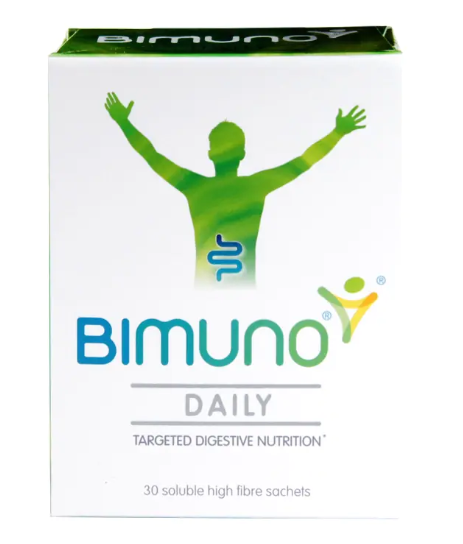
Bimuno, a e prebiotic galactooligosaccharide (GOS) ingredient, from Clasado“Science around the gut microbiome, and the role of our beneficial gut bacteria, demonstrates that there are real advantages to a better-supported gut, including from a sports and athletics perspective,” said Lucien Harthoorn, PhD, R&D director for Clasado Biosciences. “The gut microbiome appears to influence our capacity for exercise performance, playing a role in generation, storage and expenditure of energy obtained from diet, as well as inflammation, redox reactions and hydration status.”

Clasado offers the prebiotic galactooligosaccharide (GOS) ingredient Bimuno, which is resistant to heat and acidity and works in applications such as supplements, baked foods, snack bars, and functional foods and beverages.

“We’re excited to see prebiotic sports health make real waves in 2022,” Dr. Harthoorn said. “Gut health and sports nutrition are both on the rise, a convergence that can have real long-term strategic benefits for health and nutrition brands.”

Targeting younger consumers

Younger consumers are more likely to choose foods and beverages to improve their athletic performance, according to a 2021 US study from HealthFocus International, St. Petersburg, Fla. Among those of the ages 18 to 29, 63% said they chose foods and beverages to improve their athletic performance, which ranked ahead of the ages 30 to 39 at 51%, 40 to 49 at 48%, 50 to 64 at 36% and 65-plus at 28%. The top five exercise objectives of those age 18 to 29 were manage weight at 58%, build muscle at 54%, build strength at 50%, improve mood at 49% and general health at 46%.

A report from Innova Market Insights, Arnhem, The Netherlands, found millennials to be the most likely to place sports nutrition products in a grocery basket and the most adventurous when it comes to flavor. In the report 41% of sports nutrition shoppers overall considered flavor to be an important factor. 

Adblock test (Why?)


Ingredient benefits diversify in sports nutrition category | 2021-11-29 - Food Business News
Read More

Which Meal-Kit Services Give You the Best Ingredients? - PCMag.com

[unable to retrieve full-text content]

Which Meal-Kit Services Give You the Best Ingredients?  PCMag.com
Which Meal-Kit Services Give You the Best Ingredients? - PCMag.com
Read More

Villain Ingredients: The Spark & Spread - HAPPI - happi.com

[unable to retrieve full-text content]

Villain Ingredients: The Spark & Spread - HAPPI  happi.com
Villain Ingredients: The Spark & Spread - HAPPI - happi.com
Read More

In Jamie Oliver's newest cookbook, you don't need many ingredients to make a delicious meal - WBUR News

You don’t need a ton of obscure ingredients to cook up a delicious meal. That’s the crux of chef and restauranteur Jamie Oliver ’s new cook...