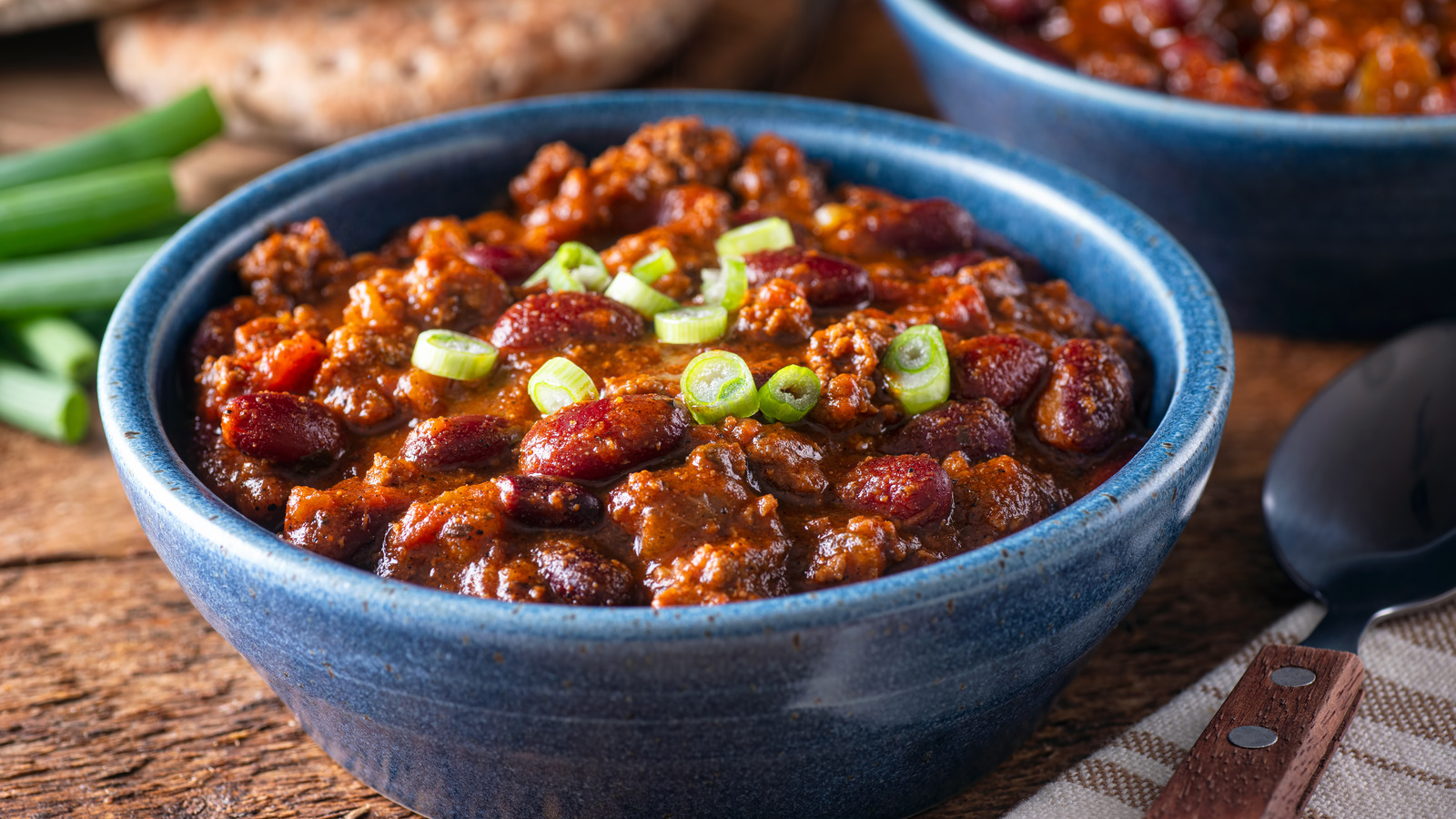
A simple way to prevent your chilli from being unsatisfyingly thin is by adding masa harina, or corn flour, to your recipe. Many at-home cooks are probably already familiar with masa flour, which is created via the ancient practice of grinding corn into a fine powder. According to Epicurious, masa harina is nixtamalized corn flour. This process is pre-colonial and essentially turns dried maíz (corn) into a more nutritional food with the addition of calcium hydroxide (historically achieved by adding wood ash or lime), and the masa produced has been used to make dishes like tamales, maíz cakes, atole, and tortillas for centuries.
Maseca is a brand of masa harina and is perfect to use as a thickener for your chili while also adding a subtle flavor to your dish. All you have to do is add it to equal parts water and stir the mix into your pot (via Serious Eats). Masa harina is not hard to get your hands on either! It is often sold in big-box stores and is almost always found in Latin marketplaces, and it's absolutely the best way to thicken up any soup, stew, or chili your heart desires.
Of all the things to love about mashed potatoes, perhaps one of the most delightful aspects of the dish is its adaptability. We've all been known to jazz up mashers with our favorite ingredients, from warming nutmeg to tangy French onion dip to crumbled bacon to grated cheese. But beloved television personality and hostessing doyenne Ina Garten opts for the sophisticated touch of a bit of freshly grated lemon zest, which brings brightness and freshness to her puréed potatoes.
Garten suggests adding a full tablespoon of zest to 2.5 pounds of hot Yukon Gold potatoes, which have been puréed using a food mill and whisked with butter and hot milk. Along with the salt, the zest is added at the last minute — Garten's recipe notes that lemon gets bitter as it sits, so it's best to serve the potatoes the same day they're made. The dish can be made a few hours in advance with everything but the zest: Reheat the potatoes over a double boiler and adding the lemon zest right before serving.
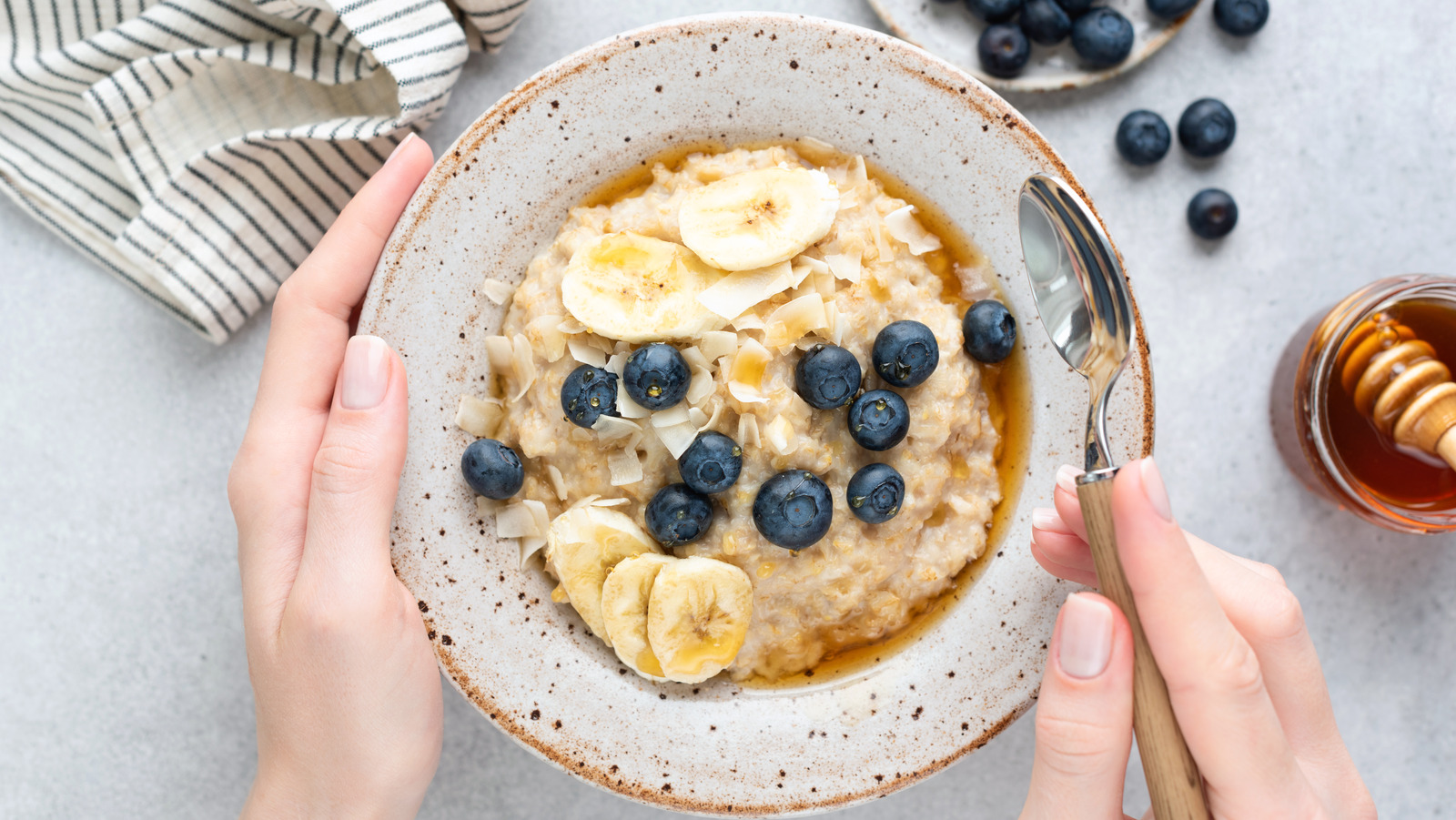
Pumpkin is full of benefits like vitamins, antioxidants, and folates (via Well Plated). So, by mixing pumpkin puree into your oatmeal, not only are you giving it a yummy fall flavor, but you're also adding even more benefits to the oats — an ingredient that the Harvard School of Public Health says is already bursting with fiber. Additionally, it's a great way to use any leftover pumpkin puree from your other fall baking experiments (via Dels Cooking Twist).
Most importantly, the pumpkin puree brings a creamy, warm, and subtly sweet flavor to any of your go-to overnight oats recipes, making your morning routine much cozier. By topping them with pecans, toasted pumpkin seeds, chocolate chips, or nut butter, you can dress your oats up whichever way you like. It's the perfect cure for any end-of-summer sadness and a guaranteed way for you to embrace the transition into the fall season.
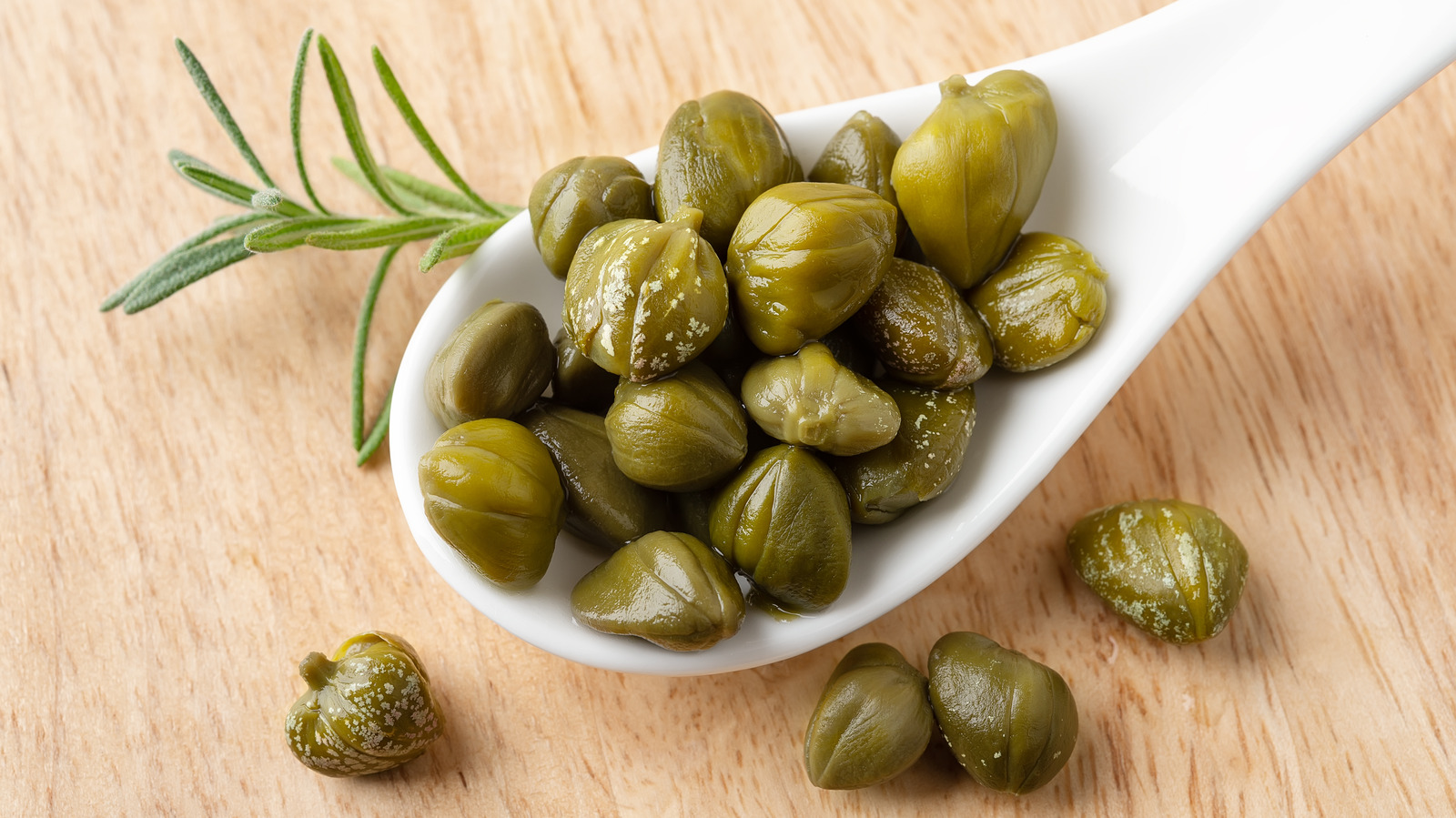
Manzanilla olives will be your best bet for caper replacements in terms of taste, texture, and appearance due to their acidic, savory flavor and their deep yellow-green color. They are grown in the southern regions of Spain, and are typically cured in lye, pitted, often stuffed with pimento or garlic (per The Spruce Eats), and preserved similarly to capers in brine, according to DeLallo. They are often used in pasta and chicken dishes, tapenades, hummus, and even in common happy hour cocktails.
It is important to remember the size difference between capers and olives if you are trying to keep the ingredient swap on the down-low. Instead of using whole olives to the recipe, consider finely chopping them before adding them to the dish. Wonderful Cook recommends using ½ tablespoon of chopped green olives for every 1 tablespoon of capers.
If you're an olive-phobe, pickles are also a good option. You've more than likely tasted some variation of a pickle, which goes through a brining process similar to capers and olives; and the citrus-like, earthy taste from the dill offers an additional layer of unique flavor that makes for a worthy caper substitute. Though pickles offer a similar taste and color to capers, you may not be able to get away with the texture as much as you would using the olives. To avoid this as much as possible, consider finely chopping them to minimize their crunchiness in the overall dish. Wonderful Cook recommends using 1 pickle slice for every tablespoon of capers.
If you’ve ever come home hungry to a fridge that only has stray vegetables and a door of condiments, you can relate to the emotional breakdown I had recently after a recent vacation. Jet-lagged and hungry, I nearly teared up when I opened the fridge. Inside, there was a lone cabbage, rolling around like a tumbleweed. Luckily, when making a satisfying plate of galam bplee pad nam bpla, that lonely cabbage is pretty much everything.
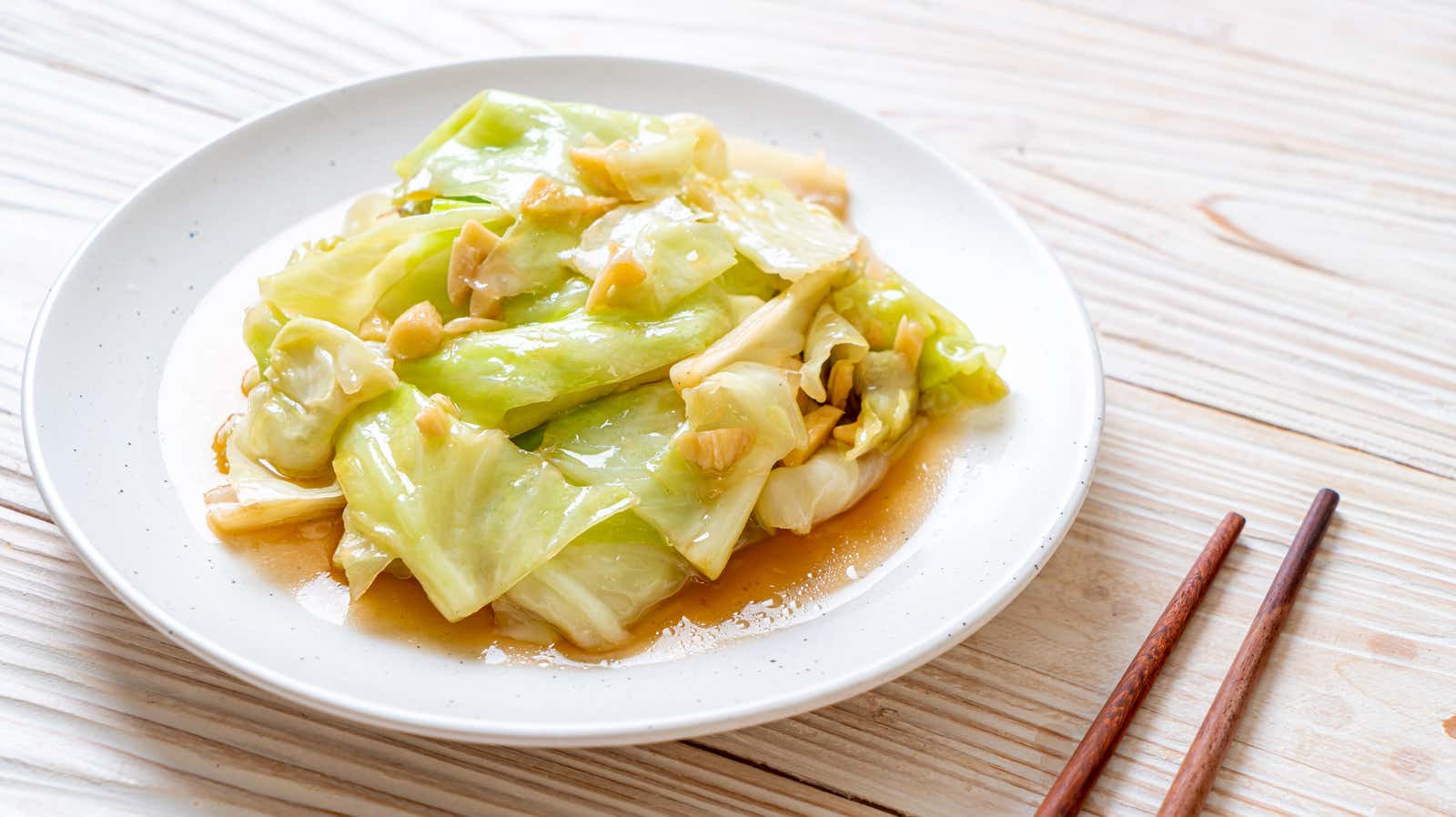
Galam bplee pad nam pbla (written in Thai as กะหล่ำปลีผัดนำ้ปลา) is a Thai dish that is essentially stir-fried cabbage with fish sauce and a heap of garlic. It’s extremely fast to cook and, honestly, as easy to make as it seems. No preparation is needed other than slicing up a few cabbage leaves and peeling the paper off of garlic cloves. Unlike many Thai dishes that can list upwards of 12 ingredients in one recipe, this one calls for just four (and one of them is cooking oil). You don’t need to be especially skilled at cooking, or even using a knife—everything is roughly cut or smashed. It’s also versatile. Make a bowl of it to eat alone on the porch for lunch, or as a side dish to impress your Thai father-in-law who’s coming to your multi-course Thanksgiving dinner.
Prep is quick and easy
To make this delicious garlicky dish, start by breaking down the cabbage leaves. For two servings, use about half a head of cabbage or about three cups of cut cabbage pieces. I do this by ripping off seven or eight of the leaves (don’t use the outermost or damaged leaves; those can be discarded), and trimming off about ½ an inch of the thick stem end. If the ribs of the cabbage are thin, then just cut widthwise into 2-inch pieces. If the rib is thick, split the leaves down the middle of the rib, then cut widthwise. Depending on the type of cabbage you’re using, you may not need to split the rib. Napa cabbage, or Chinese cabbage, has a tender rib, but the rotund green and white version can be tough.
Once the cabbage is cut, prepare your garlic by giving them a good smash with the side of a knife or the heel of your palm. This method serves double duty: the garlic paper will peel off easily and, since you won’t be slicing or mincing them in any way, they’re already smashed and ready for the pan. Prep, done.
From here on out, the cooking goes by in a flash. Set the heat to medium and add a tablespoon of canola oil (or any neutral flavored oil that has a high smoke point). Don’t bother waiting for the oil to get hot, just add the smashed garlic cloves and cook for a few minutes. When the garlic starts to take on color along the edges, add the cabbage and turn the heat up to high. Stir and toss the leaves and garlic, allowing everything to get evenly coated in oil as it sizzles and wilts. Once the cabbage is mostly softened but not completely floppy, add the fish sauce and continue tossing for another minute. Turn off the heat and serve.
The finished dish has a salty, umami punch from the fish sauce, followed quickly by a lasting, mellow garlic finish. The cabbage, hopefully, gets a little smokey char, or wok hei, and serves as more of a canvas to carry all of these flavors to your mouth with an added crunch. I’ve been known to eat this as-is, but my favorite way is next to a pile of steamed jasmine rice and soy sauce. Add a plate of steamed pork gyoza to the table and you might see cherubs, rainbows, and sparkles float by.
How to make Galam Bplee Pad Nam Pbla (Thai cabbage and fish sauce)
Ingredients:
1 head of garlic (cloves peeled and smashed)
1 tablespoon of canola oil (or other neutral cooking oil)
3-4 cups cabbage (sliced into 2-inch pieces)
1 tablespoon of fish sauce
Heat a wok over medium heat and add the oil and garlic. (If you don’t have a wok, use any large frying pan.)
Once the garlic begins to lightly brown on the edge, about 1-3 minutes, add the cabbage and turn the heat up to high. Toss and stir constantly. After a few minutes the cabbage will begin to wilt and char in places. Add the fish sauce and toss for another minute to evenly distribute the flavor.
Serve family-style or as a side dish for two to four people. This dish is best eaten the day it’s made, hot or at room temperature. Although you can keep leftovers stored in the fridge for a few days (re-fry in a pan for a few minutes to refresh it), it’ll be past its peak.
While fast-food restaurants tend to be valued for their convenience and affordability, customers are increasingly interested in the quality and nutritional value of their food, even in this arena.
Greater demand for healthy, simple fare has prompted some of America's biggest restaurant chains to completely overhaul their menus in the past year, removing artificial ingredients and implementing higher quality ones.
For chains hoping to cater to the quality-conscious crowd, things like better protein options, artisanal cheeses, and new and improved bread recipes can go a long way. Here's a look at five restaurants that have reevaluated the quality of their food to the core—and made subsequent improvements.
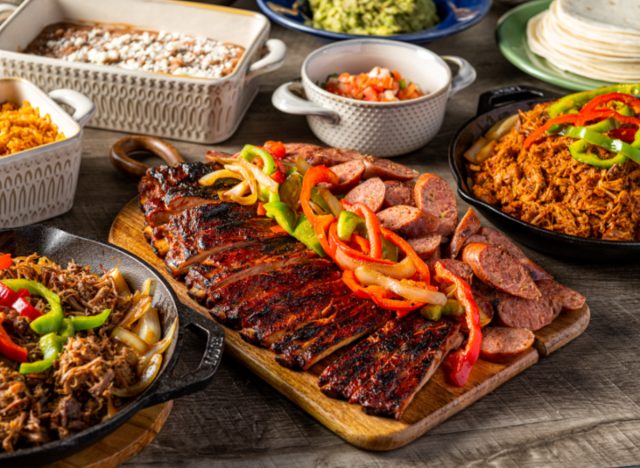
On the Border rolled out a number of ingredient upgrades in 2022, including higher quality meat and upgraded recipes for its tacos as well as better-quality steaks used in its fajitas. The latter now also comes with more plentiful garnishes.
Sauces have undergone a revamp with several bolder-flavored versions being added to the menu.
In addition to the ingredient changes, the chain also introduced some new menu items, expanding its taco category with Honey-Chipotle Shrimp Tacos and Birria Tacos. It also debuted a new Loaded Queso Burger, and brought back Chipotle Ribs, a fan-favorite menu item.
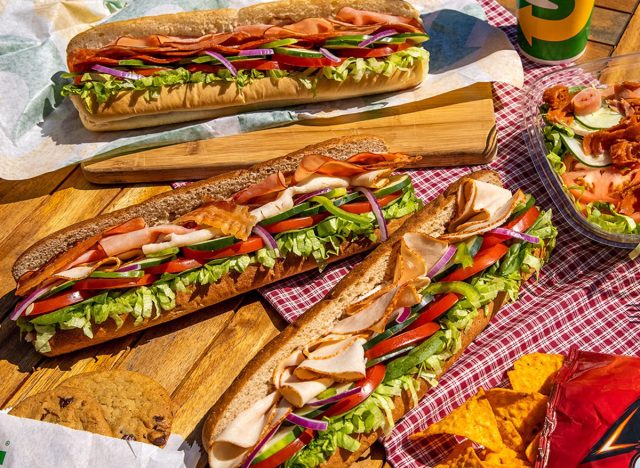
The sandwich chain completely overhauled its menu last summer as part of its Eat Fresh Refresh campaign, introducing a number of ingredient upgrades.6254a4d1642c605c54bf1cab17d50f1e
Its protein section, in particular, saw a revamp: new crispier bacon, new Black Forest ham and oven-roasted turkey which are sliced more thinly, and new thicker and juicier steak. Toppings like fresh mozzarella, a smashed avocado spread made only with avocados and salt, and a new tangy MVP Parmesan vinaigrette were also part of the new focus on quality.
The chain decided to refresh its sandwich breads selection with two new recipes for the Artisan Italian and Hearty Multigrain loaves.
Phase two of Eat Fresh Refresh launched this summer, with newly upgraded sandwiches that don't need to be customized. Doing away with the build-your-own-sandwich model means that customers now order from a menu of twelve pre-set subs, divided into four categories: Cheesesteaks, Italianos, Chicken, and Clubs.
cracker barrel
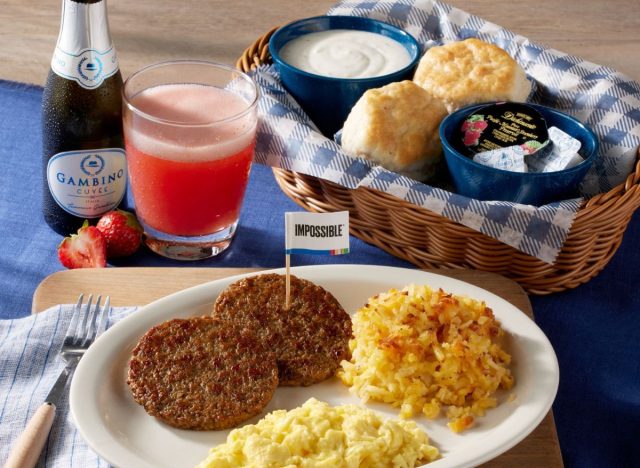
Cracker Barrel launched a new-and-improved breakfast menu this summer, transitioning to a build-your-own format. It debuted a new plant-based protein option—the new Impossible Sausage, which seemed to cause somewhat of a backlash—and upgraded its menu of breakfast meats.
Customers can now choose from Spicy Chicken Sausages, Fried Sunday Homestyle Chicken, Steak (Country Fried, Hamburger, or Sirloin), Ham (Sugar or Country), and Grilled Chicken Tenders to add to their eggs and biscuits with gravy.
There are also new premium sides to be had: fresh seasonal fruit, Hashbrown Casserole Tots, Loaded Hashbrown Casserole, or two Buttermilk Pancakes.
Facing increased competition from leading Mexican chains like Chipotle, Qdoba, and Del Taco, Moe's is hoping to entice customers with its new, revised menu, featuring a variety of ingredient upgrades and recipe tweaks.
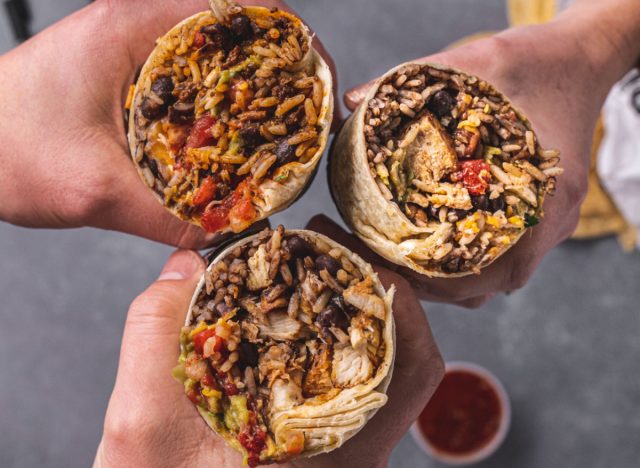
The home of The Homewrecker is now sourcing higher quality meat for its burritos, offering customers steak, white chicken, carnitas, and ground beef free of artificial colors and flavors.
Moe's has also adapted its tortilla and guacamole recipes to incorporate fresher ingredients. The gauc now comes sans tomatoes and with a more authentic flavor and texture. The chain is also market-testing a new Roasted Corn Salsa.
Owen Duff
Owen Duff is a freelance journalist based in Vermont, home of Ben & Jerry’s. Read more about Owen
Manzanilla olives will be your best bet for caper replacements in terms of taste, texture, and appearance due to their acidic, savory flavor and their deep yellow-green color. They are grown in the southern regions of Spain, and are typically cured in lye, pitted, often stuffed with pimento or garlic (per The Spruce Eats), and preserved similarly to capers in brine, according to DeLallo. They are often used in pasta and chicken dishes, tapenades, hummus, and even in common happy hour cocktails.
It is important to remember the size difference between capers and olives if you are trying to keep the ingredient swap on the down-low. Instead of using whole olives to the recipe, consider finely chopping them before adding them to the dish. Wonderful Cook recommends using ½ tablespoon of chopped green olives for every 1 tablespoon of capers.
If you're an olive-phobe, pickles are also a good option. You've more than likely tasted some variation of a pickle, which goes through a brining process similar to capers and olives; and the citrus-like, earthy taste from the dill offers an additional layer of unique flavor that makes for a worthy caper substitute. Though pickles offer a similar taste and color to capers, you may not be able to get away with the texture as much as you would using the olives. To avoid this as much as possible, consider finely chopping them to minimize their crunchiness in the overall dish. Wonderful Cook recommends using 1 pickle slice for every tablespoon of capers.